
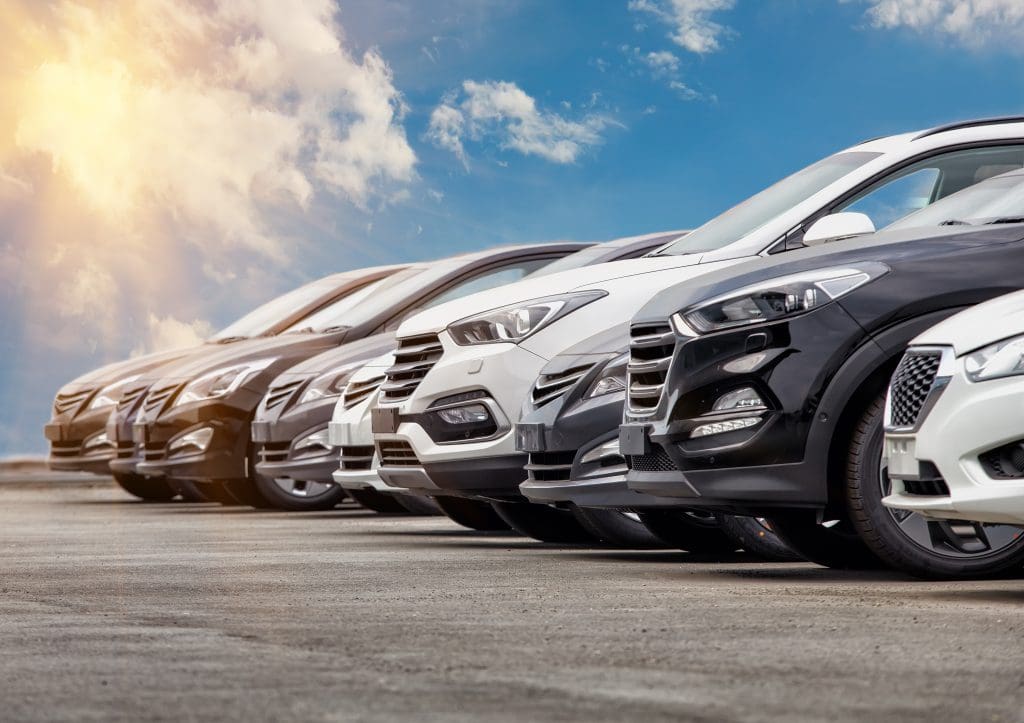
The Australian automotive industry has evolved over the years, with car brands coming and going depending on government policies and market forces. It looks like over the next few years, we can expect an influx of new brands and various types of vehicles, which could bring some new opportunities and risks for those looking for a new car and those who will have to service and repair them.
The Past
If you look back at the history of the Australian car industry, many vehicle brands have come and gone; some were locally owned, others were branches of large international companies. Now that all major car manufacturers have ceased local production, we buy only imported vehicles. And with the transition to electric vehicles, many new brands will soon enter the market. But if history repeats, not all will be successful long term.


The Future
Australia is seeing a significant influx of new automotive brands, predominantly from China and the United States, offering electric (EV) and plug-in hybrid (PHEV) vehicles. In 2025, these brands established their Australian presence and are actively expanding their lineups:
- Cadillac (USA): General Motors officially as an EV brand in early 2025 with the Lyriq SUV and will add the Optiq and Vistiq in 2026.
- Deepal (China): Launched in early 2025 with the S07 SUV; it will add the E07 crossover-ute and S05 small SUV soon.
- GAC Aion (China): Debuted in late 2025 with the Aion V and Emzoom; it plans to introduce a small electric hatchback in the first half of 2026.
- Leapmotor (China): Arrived in early 2025 with the C10 SUV and will release the B10 small SUV in early 2026.
- XPeng (China): Launched in 2024/2025 with the G6; for 2026, it has locked in the X9 people mover and the G9L flagship SUV.
- Zeekr (China): Entered in late 2024/2025; it will expand its lineup in 2026 with the 8X “Super Hybrid” PHEV.
Several brands have officially confirmed their arrival or are slated for a local debut during 2026. Some are listed below.
- Denza (China): Owned by BYD, this luxury brand will launch in January 2026 with the B5 and B8 plug-in hybrid SUVs.
- Forthing (China): A subsidiary of Dongfeng, it plans to enter in 2026 with the Friday, an electric SUV available in both EV and range-extender (REEV) versions.
- Lepas (China): Chery’s fourth sub-brand in Australia, focusing on sporty SUVs for young buyers, will debut in 2026 with the L8 mid-size SUV.
- Wey (China): GWM’s luxury arm is confirmed for a 2026 launch, likely featuring the 80 (also known as the G9) plug-in hybrid people mover.
- Nio (China): Known for battery-swapping technology, Nio is poised to launch in 2026, starting with the Firefly compact electric hatchback.
- Avatr (China): A high-end partnership between Changan, CATL, and Huawei, it is expected to launch in 2026 with models like the Avatr 11 crossover.

The above list is only a few of those expected to arrive over the next decade, as some market analysts predict that by 2031 there will be 75 different vehicle brands for sale in Australia. Some of this is due to EV manufacturers using Australia as a test case for other Western markets to see which makes and models work best. This means that it is highly likely that some will not take and will be withdrawn from the market.
The Upside
The benefits of this situation are that the Australian consumer will be spoilt for choice if they want a hybrid or EV car, and it will create an opportunity for those in the service and repair industry with the right training and equipment to service and repair these vehicles.
The Downside
The downside is that if the brand is withdrawn from the market, will there be access to parts and service information without a dealership network? One recent example is the JMC Vigus. It is a dual-cab ute, manufactured by the Chinese brand JMC, sold in Australia between 2016 and 2018 as a budget alternative to other utes. Official sales data for the Vigus were not publicly reported, and the brand pulled out due to a lack of buyer interest. The VACC’s Technical Advisory Service has occasionally received requests from our subscribers seeking service and repair information on these vehicles. Unfortunately, this information is not available on the aftermarket, and we have found no OEM support in English.
Chery sold 4600 cars in Australia from 2011 to 2015, before the brand was discontinued, with little or no support from the brand once they left, to our knowledge. But it seems timing is everything, as Chery returned in 2023 and now seems established in the Australian market.
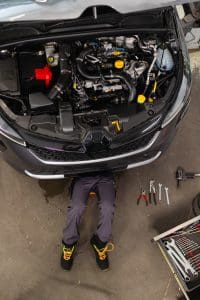
In America in the early 1900s, there were hundreds of vehicle makers and brands, but over the years, through failures and buyouts, the number of car manufacturers dwindled to the Big Three. China is in a similar situation now with EV manufacturers; they are being innovative and trying various strategies to see what works with these new technologies. Market forces will soon start sorting out what works and culling the rest. The fun for the automotive repair industry will be finding out whether parts and service information will still be available for vehicles on the road from brands that have left the market. Exciting times ahead.
VACC MotorTech has information on Hybrid and Electric Vehicles for qualified technicians.
For information on our High Voltage Data go:
For information on our EV courses
