As electric vehicles (EVs) and plug-in hybrid electric vehicles (PHEVs) become increasingly common on Australian roads, many drivers are asking the same question: “How do I look after my battery?”
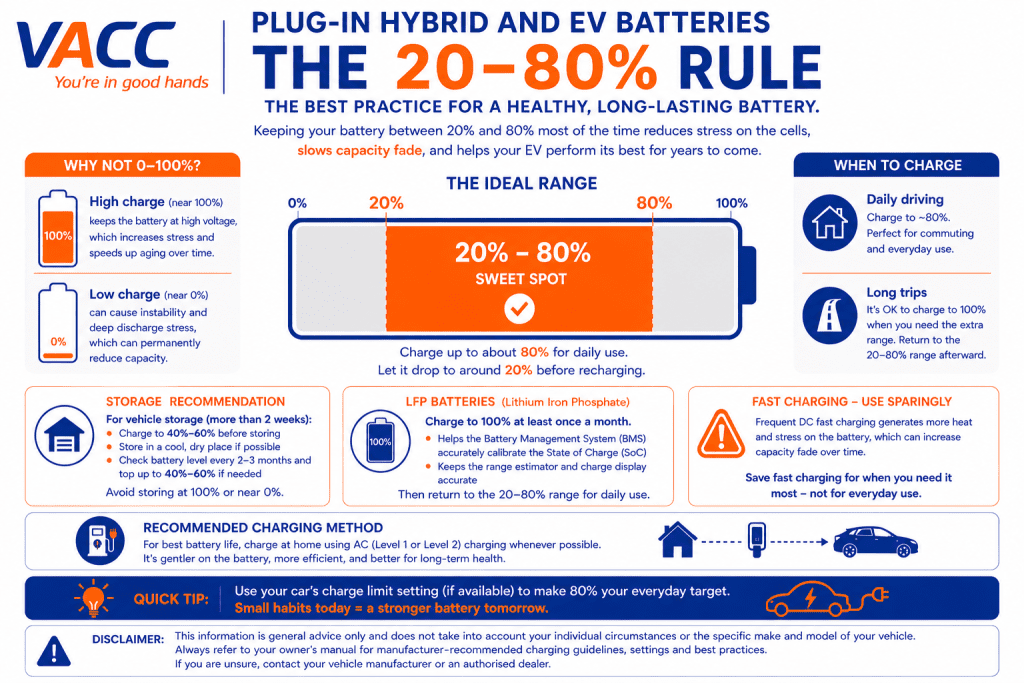
One of the most widely discussed recommendations is the “20–80% rule”. While this guideline won’t apply to every vehicle in every situation, understanding why it exists can help drivers maximise battery performance and potentially reduce long-term battery degradation.
What is the 20–80% Rule?
First, to be clear, this is not the Pareto Principle, which states that roughly 80% of outcomes result from 20% of all causes. For electric vehicles, the 20–80% rule recommends keeping the battery charge level between 20% and 80% for day-to-day driving.
Rather than regularly charging the battery to 100% or discharging it close to 0%, many battery experts and vehicle manufacturers recommend operating within this middle range whenever practical.The reason is simple: lithium-ion batteries experience less stress when they are not held at extremely high or extremely low states of charge.

Why Do High and Low Charge Levels Matter?
Modern EV batteries are designed with sophisticated Battery Management Systems (BMS) that protect them from damage. However, battery chemistry still matters. When a battery remains at a very high state of charge for extended periods, the cells operate at higher voltages. This can accelerate chemical ageing inside the battery.
Similarly, repeatedly allowing the battery to become very low can place additional stress on the cells and increase the risk of deep discharge if the vehicle is left unused.While occasional charging to 100% or running the battery below 20% is generally not a problem, doing so every day may accelerate battery degradation over many years.
When Is It Okay to Charge to 100%?
The 20–80% rule should be viewed as a guideline rather than a strict rule. There are many situations where charging to 100% makes perfect sense, including:
- Before a long road trip
- When towing a trailer or caravan
- When travelling in remote areas
- When maximum driving range is required
- When recommended by the vehicle manufacturer
If you’re planning a long journey across regional Australia, having access to the full battery capacity can provide valuable peace of mind.The key is to avoid leaving the vehicle sitting at 100% charge for extended periods unless required.
Special Considerations for LFP Batteries
Some modern EVs use Lithium Iron Phosphate (LFP) batteries rather than the more common Nickel Manganese Cobalt (NMC) chemistry. LFP batteries are generally more tolerant of being charged to 100% and often experience less degradation from high states of charge.
In fact, several manufacturers recommend charging LFP-equipped vehicles to 100% approximately once a month. This helps the Battery Management System accurately calculate battery state of charge and maintain range prediction accuracy. If your vehicle uses an LFP battery, always follow the manufacturer’s specific recommendations.

AC Charging vs DC Fast Charging
One of the most important factors affecting battery health is how the vehicle is charged.
AC Charging
Alternating Current (AC) charging is the most common charging method used at home and many workplaces. With AC charging, electricity is supplied to the vehicle and converted into Direct Current (DC) by the vehicle’s onboard charger before reaching the battery.
DC Fast Charging
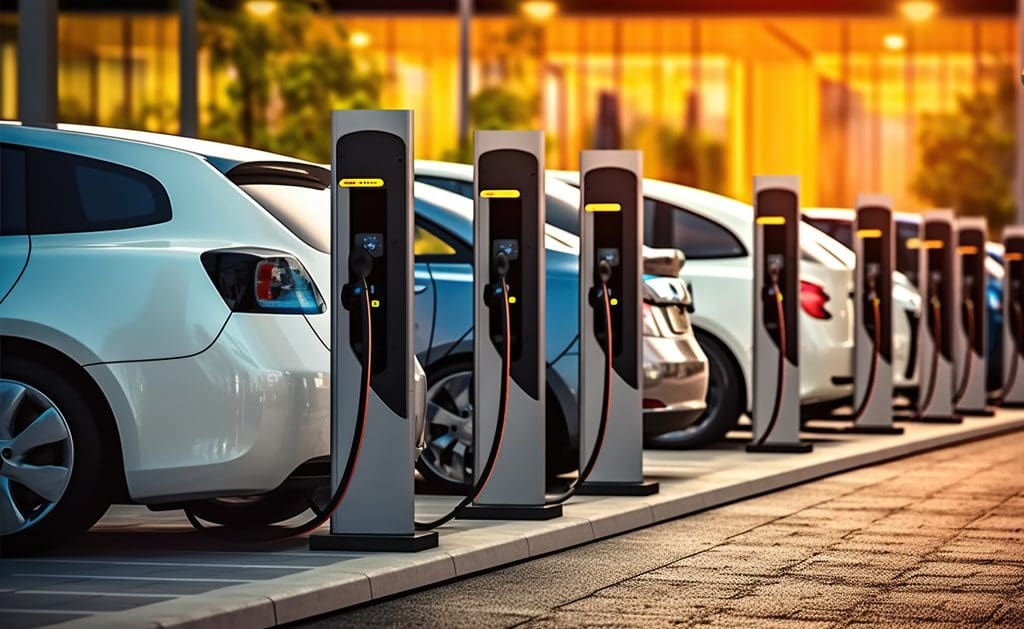
Direct Current (DC) fast charging bypasses the vehicle’s onboard charger and supplies power directly to the battery. These chargers are commonly found at public charging stations along highways and major transport routes.
Most manufacturers design their batteries to handle occasional fast charging without issue. However, relying on DC fast charging as the primary charging method every day is generally not considered best practice for long-term battery health.
What About Vehicle Storage?
If your EV or plug-in hybrid will be parked for an extended period, battery charge level becomes important. Many manufacturers recommend storing the vehicle with the battery somewhere between 40% and 60% charge.
If the vehicle will be unused for several months, store it in a cool, dry location if possible. Avoid leaving it at 100% charge or very low charge. Following these simple steps can help minimise battery stress during storage.

The Bottom Line
The 20–80% rule is a useful guideline that can help reduce battery stress and support long-term battery health. However, it should not be viewed as a rigid requirement.
Modern EVs and plug-in hybrids are equipped with sophisticated battery management systems designed to protect the battery under a wide range of operating conditions.
For most Australian drivers, the best approach is simple:
- Charge to around 80% for everyday driving, many cars will have a setting to limit charging to 80%.
- Use 100% charge when extra range is needed.
- Prefer AC charging for routine charging.
- Only use DC fast charging when convenience and travel requirements demand it.
- Follow manufacturer recommendations for battery storage and maintenance.
- If your vehicle uses an LFP battery, follow the manufacturer’s guidance regarding periodic 100% charging.
Most importantly, always refer to your vehicle owner’s manual for charging recommendations, battery care information and operating guidelines specific to your vehicle. Manufacturer recommendations should take precedence over general advice.
If you’re unsure about the best charging practices for your vehicle, speak with your local VACC member workshop or automotive professional. They can provide advice tailored to your vehicle and help you get the most from your battery for years to come.